Tartar accumulation begins within 24 to 48 hours of a professional cleaning if daily plaque removal is not maintained.
The American Veterinary Dental College estimates that by age three, 80% of dogs show signs of periodontal disease. By age two, that number is already meaningful. It starts early, progresses without symptoms, and produces its most serious consequences years after the window for easy prevention has closed.
The biology behind this is straightforward. Look at how plaque works and how few owners intervene, and the 80% figure stops being surprising.
How Plaque Becomes Disease
Within hours of eating, a thin film of glycoproteins from saliva coats the tooth surface. This pellicle layer attracts bacteria. Within 24 hours, those bacteria form a structured community called plaque: a soft, sticky biofilm that adheres to the enamel surface and below the gumline.
Plaque is the starting point. If it is mechanically disrupted daily, the bacterial colony cannot mature into a disease-producing state. Tooth brushing accomplishes that: mechanical disruption. Water additives, dental chews, and sprays do not achieve the same degree of disruption. The Academy of Veterinary Dentistry says so in direct terms: daily toothbrushing remains the gold standard for home dental care in dogs.
When plaque is not disrupted, it mineralizes within three to five days. Calcium and phosphate from saliva bind into the biofilm and harden it into calculus, also called tartar. Once calculus forms, brushing cannot remove it. Only an ultrasonic scaler under anesthesia can break it down. The calculus itself is not the primary problem. It is a surface on which new plaque layers accumulate faster, accelerating the cycle.
What Happens Below the Gumline
The visible portion of dental disease, the yellow-brown buildup on tooth surfaces, is what owners notice. The damage that matters happens below the gumline, where no one can see it without probing.
As plaque extends below the gumline into the sulcus (the groove between tooth and gum), the immune system mounts a local inflammatory response. The gums redden and swell. This is gingivitis, the first clinical stage of periodontal disease. At this stage, the disease is still reversible. Professional cleaning and consistent home care can restore gum health.
Without treatment, bacterial toxins and inflammatory mediators destroy the periodontal ligament, the connective tissue that anchors each tooth to its socket. The supporting alveolar bone follows. This is periodontitis, and it is not reversible. The bone that is lost does not grow back. Teeth loosen. Extraction becomes necessary.
"Most dogs I see for dental work have been living with active periodontitis for two years or more. The owners had no idea. The dog never stopped eating, never whined, never gave a signal that made it past the stoic threshold."
Dr. Jan Bellows, veterinary dental specialist, Hometown Animal Hospital, Weston, FloridaSmall and toy breeds progress faster. Their teeth are larger relative to the jaw, creating more crowding and deeper pockets for bacteria to colonize. A Chihuahua with no dental care at age five may have the same degree of bone loss as a Labrador at age ten.
Why the Bacteria Do Not Stay in the Mouth
The inflamed gum tissue in active periodontitis is an open wound. The gingival sulcus becomes a portal for bacteria to enter the bloodstream, a condition called bacteremia. In dogs with significant periodontal disease, it occurs every time they chew.
A 1996 study published in the Journal of Veterinary Dentistry by Dr. Larry Glickman at Purdue University tracked more than 45,000 dogs and found a statistically significant association between periodontal disease and heart disease. Dogs with stage 3 or 4 periodontal disease had a 6% higher rate of heart abnormalities. A 2009 follow-up found associations with kidney disease as well.
The mechanism is not well understood, but the leading hypothesis involves bacterial seeding of tissues via the bloodstream. The liver filters blood on a continuous loop and takes repeated exposure. The kidneys filter about 200 liters of blood per day in an average dog. The heart valves, the mitral valve in particular, are susceptible to bacterial adhesion.
None of this means dental disease causes heart failure in every affected dog. The relationship is associative, not causal in every case. But veterinary dental specialists point to this data when they argue for treating periodontal disease as a systemic health issue rather than a cosmetic one.
Why Prevention Fails in Most Households
Veterinary surveys show that fewer than 5% of dog owners brush their dog's teeth daily. The most common reasons: the dog resists, it takes too long, and the owner did not establish the habit when the dog was young.
Dogs that were not acclimated to tooth brushing as puppies are much harder to brush as adults. A dog that has never had its mouth handled, has no positive association with toothbrushes, and is experiencing active gum pain will not accept a toothbrush. This is not a training failure. It is a behavioral reality that veterinary dentists account for when recommending care plans.
That gap between what works best and what owners can manage has driven growing interest in home dental care approaches that do not require brushing, above all for owners of adult dogs with no prior dental handling experience. Enzymatic formulations applied as gels or through lick-on formats have shown some efficacy in reducing plaque bacteria load in dogs that resist brushing. The evidence for these approaches is not as strong as for daily brushing, but a consistent alternative beats doing nothing in a dog that is already showing signs of disease.
One area of current development is enzymatic dental products that work through the dog's own licking behavior rather than requiring a brush. An at-home approach designed for dogs that resist brushing is showing early results worth examining, above all for owners who have struggled with traditional toothbrushing.
What Professional Cleaning Involves
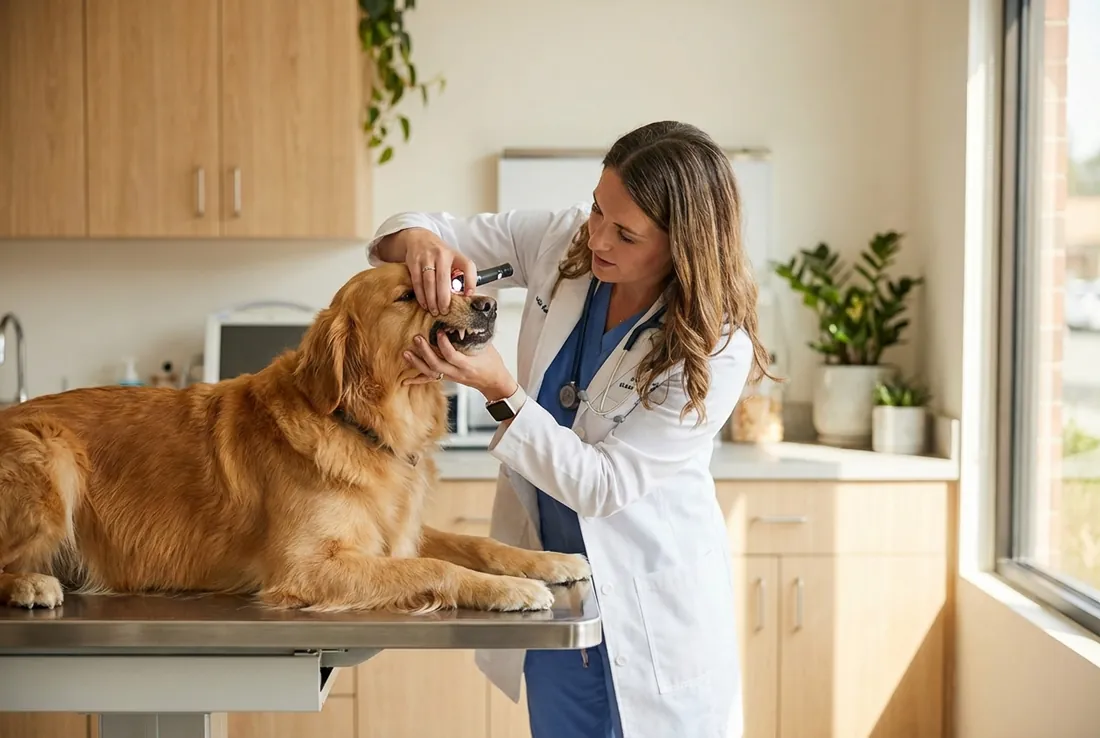
A professional dental cleaning in veterinary medicine requires general anesthesia. This is non-negotiable. Anesthesia-free dental cleanings, offered by some grooming salons and mobile services, are condemned by the American Veterinary Dental College. The tools required to scale below the gumline, where disease lives, cannot be used on a conscious dog without risking injury. Surface cleaning above the gumline produces cosmetic results only.
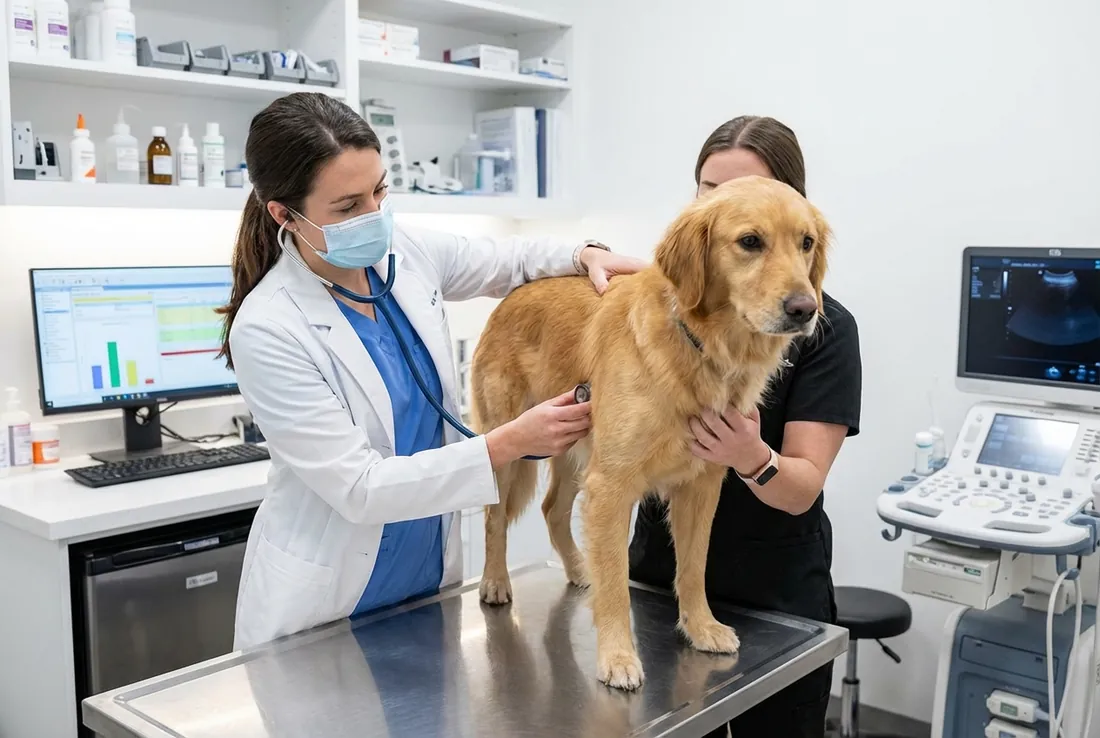
Under anesthesia, the vet or veterinary dental technician scales all tooth surfaces with an ultrasonic scaler, probes each tooth for pocket depth and bone loss, takes dental radiographs to assess bone levels under the gumline, and polishes the teeth to smooth the enamel surface. Any tooth with significant bone loss, mobility, or root exposure gets extracted.
Dental radiographs are underused. Studies show that 25 to 50% of significant dental findings are visible only on X-ray. A cleaning without radiographs misses a large fraction of the disease present.
Costs vary by region and clinic: $800 to $1,200 for a straightforward cleaning with radiographs in most markets. Add $150 to $300 per extraction. Senior dogs or those with heart conditions may require pre-anesthetic bloodwork and cardiac evaluation, adding $150 to $300. A dog that comes in at Grade 3 or 4 with multiple extractions needed may face a $2,500 to $3,500+ bill.
What You Can Do Starting Now
For puppies: start handling the mouth from day one. Lift the lips, touch the teeth, put a finger along the gumline during play. Graduate to a finger brush with pet-safe toothpaste (poultry flavored formulations are the most accepted). The goal is daily contact before any disease develops.
For adult dogs with no dental history: book a professional cleaning first. Attempting home care on a mouth with active disease is like trying to maintain paint on a car that has structural rust. Address the underlying disease, then build the maintenance habit on a clean foundation.
For dogs that resist brushing: research enzymatic alternatives with documented plaque reduction data. Look for products with VOHC (Veterinary Oral Health Council) acceptance, which requires clinical trial evidence. Dental chews with the VOHC seal provide modest mechanical and enzymatic benefit. They do not replace brushing or professional care, but they add to a broader prevention plan.
The 80% figure is not an accident of nature. It is the predictable outcome of anatomy (dogs' teeth accumulate plaque fast), diet (soft processed foods leave residue), and behavior (owners do not brush their dogs' teeth). Each of those factors is changeable. The window is widest before disease establishes itself. After that, management is still possible, but the starting point keeps getting harder.
For more on what a vet checks during a dental assessment, see our full guide to what happens during a dog wellness exam.