Dogs entering their senior years still have real time ahead. How that time goes depends on what happens in the first year after the transition.
The threshold of "senior" in dogs is not a fixed age. A Great Dane is elderly at seven. A Beagle at seven is closer to middle-aged. A Chihuahua may not qualify as senior until nine or ten. Body size is the main determinant because larger dogs age faster at the cellular level, driven in part by higher IGF-1 (insulin-like growth factor) levels that accelerate metabolic processes.
For most medium-to-large breeds, the veterinary consensus places the senior threshold at seven years. This article uses that benchmark, while acknowledging that giant breeds should apply its advice two years earlier and small breeds may wait a year or two longer.
Below is the body-system-by-system account of what changes, which changes are normal aging and which signal disease, and what evidence-based management looks like at each stage.
Musculoskeletal: The Joints and Muscles
Osteoarthritis is the most prevalent condition in dogs over seven. The Banfield Pet Hospital State of Pet Health report lists it as a top-five diagnosis in senior dogs, with prevalence climbing after age eight. The joint changes start years before any visible signs appear.
What normal aging looks like: a dog that sleeps more, plays with less intensity, and takes longer to warm up after rest. These are physiological slowing. What disease looks like: a dog that hesitates before climbing stairs it handled six months ago, that holds one leg at a different angle, that flinches when touched in the lumbar region or over a hip, or that gets up from sleep much more stiff than before.
The distinction matters because normal aging does not respond to NSAID therapy. Arthritis does. A dog whose reduced activity is pain-driven will often show marked improvement within 72 hours of appropriate pain management. If your vet prescribes a two-week NSAID trial and the dog's behavior changes, that was not aging. That was treatable disease you can now continue to manage.
Weight management is the most powerful intervention. Every kilogram of excess body weight adds three to four kilograms of force through each joint during a normal walking stride. A dog already losing cartilage cannot afford that added stress. A 2002 study in the Journal of the American Veterinary Medical Association showed that lean body-conditioned Labrador Retrievers had a median lifespan 1.8 years longer than their heavier littermates and developed arthritic signs three years later.
Physical therapy and controlled low-impact exercise, swimming in particular, maintain joint range of motion and preserve periarticular muscle mass without the impact loading of running on hard surfaces. Certified canine rehabilitation practitioners (CCRP) provide structured programs for senior dogs that are worth the investment for dogs with moderate-to-advanced arthritis.
Cognitive Changes: Normal Aging Brain vs. CDS
Canine Cognitive Dysfunction Syndrome (CDS), the dog equivalent of Alzheimer's disease, affects an estimated 28% of dogs aged 11 to 12 years and 68% of dogs aged 15 to 16. The condition involves accumulation of beta-amyloid plaques in the brain and progressive neuronal loss.
The classic CDS checklist, often summarized as DISHA, covers: Disorientation (getting lost in familiar spaces, staring at walls), Interactions changing (less interest in people or family, or the opposite, increased clinginess), Sleep-wake cycle reversal (active at night, sleeping during the day), House soiling (losing once-reliable housetraining), and Activity level changes (decreased interest in play, exploration, or food).
"I see dogs that have been 'getting old' for two years that actually have moderate-to-advanced cognitive dysfunction. The owners thought it was normal. It's not. It's a disease with treatments that can slow it."
Dr. Gary Landsberg, veterinary behaviorist, North Toronto Animal ClinicNormal cognitive aging in dogs looks different: slower learning of new tasks, reduced responsiveness to commands the dog has known for years, decreased activity. These are gradual and mild. CDS is progressive and functional: a dog that cannot find its way to its food bowl in a house it has lived in for ten years does not have normal aging. It has a disease.
Treatments include selegiline (Anipryl), approved for CDS in dogs, which increases dopamine and reduces free radical damage in neural tissue. Dietary interventions with omega-3 fatty acids, medium-chain triglycerides, and antioxidants (available in senior prescription diets like Hill's b/d) show modest evidence of slowing progression. Environmental enrichment through food puzzles and regular low-intensity training maintains cognitive engagement and is part of every management protocol.
Organ Systems: What Changes and When
Kidneys: Chronic kidney disease (CKD) affects about 10% of dogs, with prevalence rising after age seven. The kidneys lose functional nephrons over time through a combination of aging, prior infections, toxin exposures, and genetic predisposition. Dogs compensate by concentrating urine with the remaining nephrons. The first sign owners often notice is increased water intake and urination, as the kidneys lose concentrating ability. By the time BUN and creatinine rise outside normal ranges, 75% of nephron function may already be lost. Annual urine specific gravity measurement and a senior chemistry panel are the only way to catch this early.
Heart: Mitral valve disease (MVD) is the most common cardiac condition in senior dogs, and small breeds are most at risk. A grade 1 or 2 murmur found at a senior wellness exam can be managed with medication (pimobendan, ACE inhibitors) that the EPIC trial showed delays the onset of congestive heart failure. Large breed dogs are more susceptible to dilated cardiomyopathy (DCM), with Dobermans, Boxers, and Irish Wolfhounds at highest risk. Vets recommend biannual echocardiography for high-risk breeds starting at age five or six.
Liver: Hepatic function declines with age, but the liver has enormous functional reserve. Liver disease does not produce symptoms until 70 to 80% of function is lost. Annual liver enzyme panels catch elevations before clinical signs develop. Dogs with elevated ALP or ALT at a wellness visit warrant follow-up assessment even if they appear healthy.
Endocrine: Hypothyroidism and Cushing's disease (hyperadrenocorticism) both become more common after seven. Hypothyroid dogs gain weight, lose coat quality, become lethargic, and may develop skin infections. Owners often attribute this to aging. Cushing's dogs drink too much water, lose muscle mass, develop a pot-bellied appearance, and may have thin skin with hair loss. Both are treatable with appropriate medication, and dogs show quality-of-life improvement within weeks of starting treatment.
Dental Health in Senior Dogs: The Compounding Problem
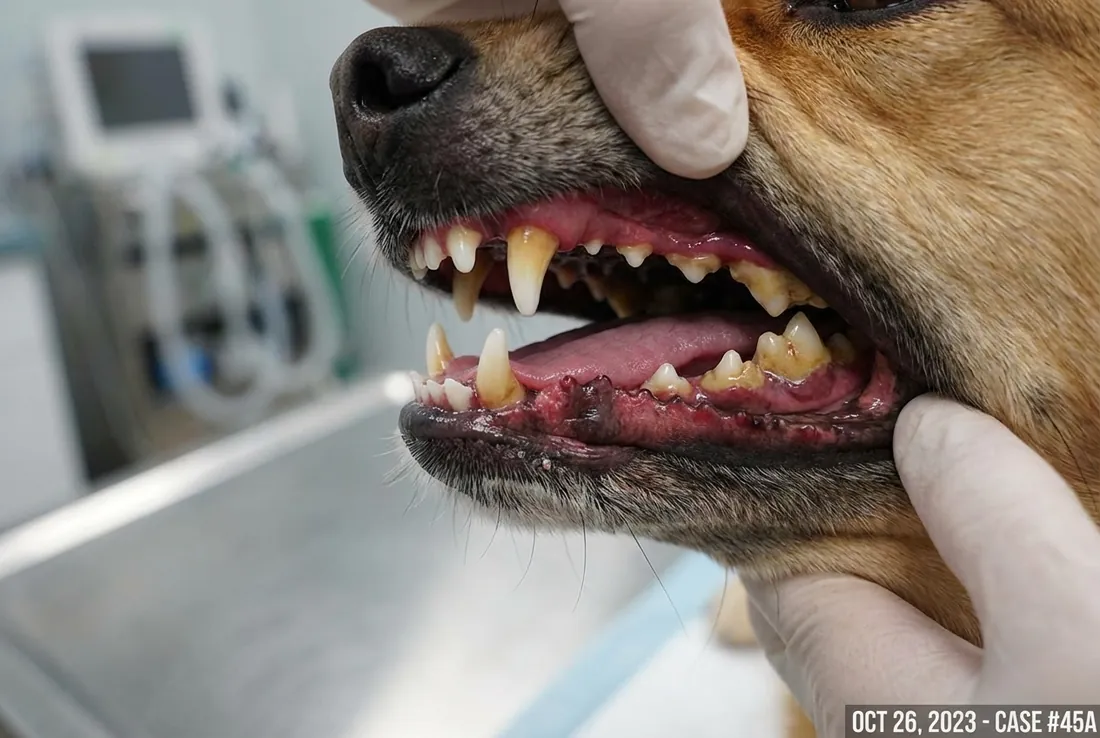
Senior dogs carry years of accumulated periodontal disease. A 10-year-old dog with no dental care history may have Grade 3 or 4 periodontal disease affecting most of its teeth. This creates a management problem: dental cleanings require anesthesia, and senior dogs with heart or kidney disease carry higher anesthetic risk than healthy adults.
Avoiding dental care is the wrong response. The right approach is pre-anesthetic bloodwork, cardiac evaluation where indicated, and careful anesthetic protocol selection. Veterinary anesthesiologists and internal medicine specialists manage cleanings in dogs with controlled heart murmurs, early kidney disease, and other senior conditions. The risk of continued periodontal disease, including the systemic bacteremia and organ damage discussed in our dental disease article, outweighs anesthetic risk when that risk is managed well.
Between professional cleanings, home dental care becomes even more important in senior dogs. Dogs that have never accepted toothbrushing are not going to start at age nine. This is where enzymatic dental products that work through a dog's own licking behavior matter most. An at-home dental approach that does not require brushing or restraint is worth knowing about if you are managing a senior dog with established dental disease and limited tolerance for handling.
The Twice-Yearly Exam After Seven
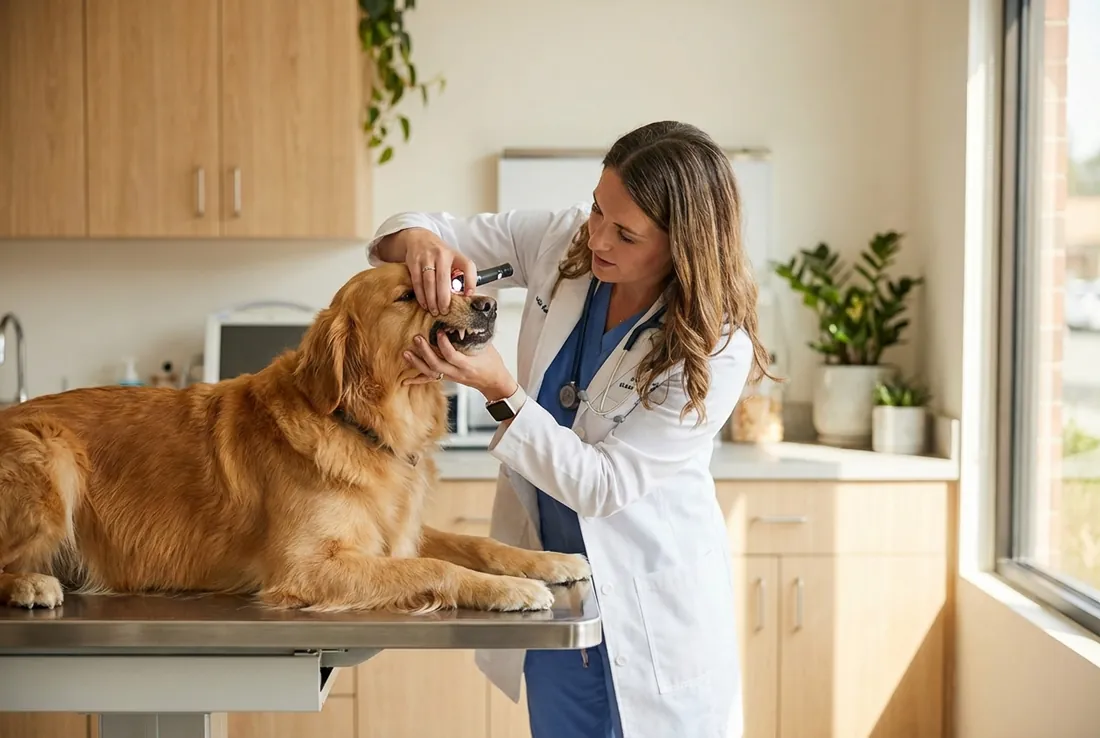
The standard recommendation from both the AAHA and the AVMA is twice-yearly wellness visits for dogs over seven. This reflects the rate at which age-related conditions progress and the value of six-month surveillance versus twelve-month surveillance in animals whose biological year moves faster than a human's.
A senior wellness panel adds SDMA (symmetric dimethylarginine), a more sensitive early marker of kidney function decline than BUN or creatinine, to the standard chemistry panel. It may also include a urine protein-to-creatinine ratio, a complete blood count, and thyroid hormone levels. The full panel runs $200 to $400 depending on the practice. Run it once a year at minimum, and twice yearly in dogs over ten or those with known organ system disease.
What You Can Do
The practical checklist for a dog crossing into senior years is not complicated, but it requires consistency. Book a baseline senior wellness visit with a full chemistry panel, urinalysis, CBC, and blood pressure measurement. Discuss the findings with your vet and establish a monitoring calendar. Assess body condition score and make dietary adjustments if the dog carries excess weight. Evaluate the current diet for senior-appropriate protein and phosphorus levels, and discuss whether a senior or prescription diet is appropriate based on any organ system findings.
Watch the water bowl. Increased water intake is one of the most reliable early signs of kidney disease, diabetes, Cushing's, or pyometra in intact females. Get a rough baseline on how much your dog drinks in a 24-hour period. A useful benchmark: more than 100 mL per kilogram per day warrants a veterinary discussion.
Watch the floor. A dog that slips on hardwood more than it used to is losing muscular control in its hindquarters. This may be arthritis. It may be degenerative myelopathy, a progressive spinal condition common in German Shepherds, Corgis, and Boxers. It may be a spinal lesion. None of these is "just getting old" in the sense of being untreatable.
You cannot stop your dog from aging. You can distinguish what is treatable from what is not, address the treatable conditions, and give your dog better function in the years it has. That starts with paying attention to specific changes rather than writing them off as "getting old."
For more on the signs that distinguish aging from disease, read our guide to 7 warning signs your dog is hiding pain. For a full picture of what a senior wellness exam covers, see what happens during a dog wellness exam.