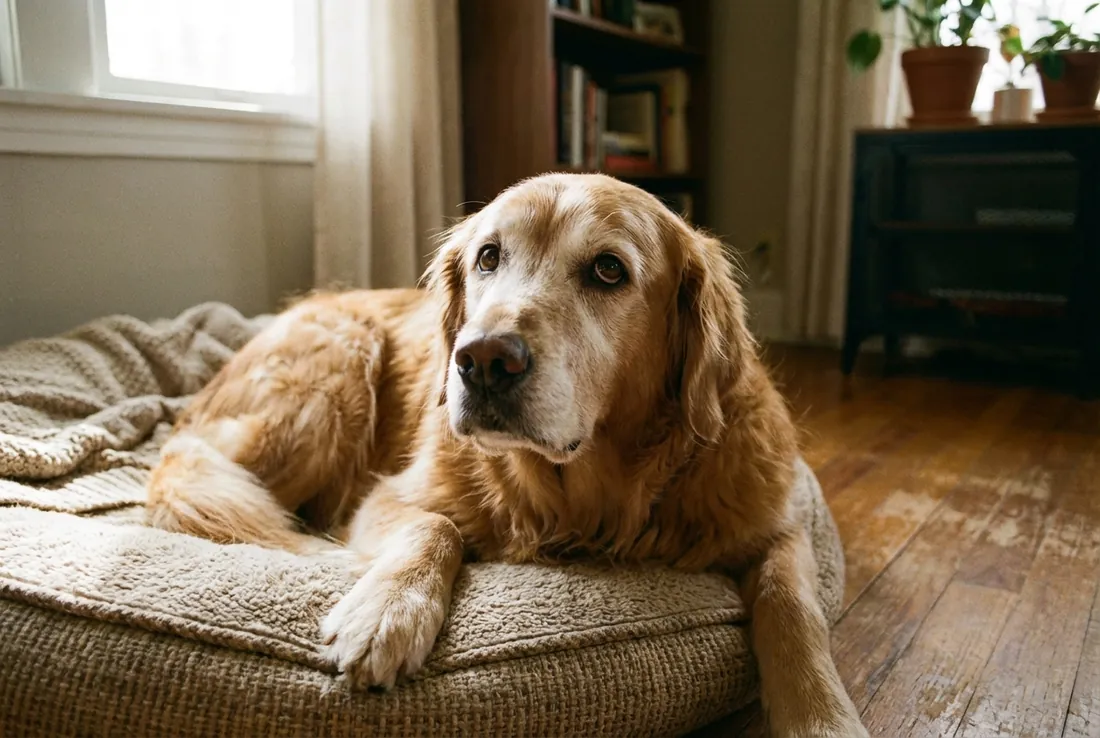
Quiet withdrawal is one of the most consistent early signs of pain in dogs.
In the wild, a dog that shows pain becomes a target. Predators single out the weak. Over thousands of generations, dogs developed a strong instinct to mask discomfort, to keep moving, keep appearing capable. That instinct did not disappear when dogs moved into our homes.
Dr. Robin Downing, a pain management specialist and founder of the Downing Center for Animal Pain Management in Windsor, Colorado, has spent her career decoding what pain looks like in animals that cannot describe it. "Dogs are stoic by design," she said. "By the time a dog is showing obvious signs of pain, the condition causing that pain has usually been present for a significant period."
The seven signs below are not dramatic. They are the quiet shifts that owners notice on some level but rationalize away. Learning to read them as warning signs changes how fast a dog gets help.
1. Changes in Posture and Movement
A dog in pain alters how it holds its body. It may stand with its back a bit hunched or shift weight off one leg. These adjustments happen without conscious effort as the dog tries to offload pressure from the painful area.
Watch for a dog whose movement changes after rest. Stiffness in the first few steps after getting up from sleep, then loosening once the body warms up, is a classic early arthritis pattern. Many owners interpret this as normal aging. Veterinary internal medicine specialist Dr. Michael Petty, author of Dog Pain Management for Dummies, argues that "slowing down with age" often means "slowing down with pain." The distinction matters because pain is treatable.
Track it with specifics: Is your dog hesitating before jumping onto furniture it used to leap onto without thought? Does it take the stairs slower than six months ago? These are measurable changes, not vague impressions.
2. Reduced Appetite or Changes in Eating Behavior
Pain suppresses appetite in dogs the same way it does in humans. A dog dealing with abdominal pain, dental pain, or musculoskeletal discomfort may eat less, eat at a slower pace, drop food from its mouth, or show interest in food but then walk away.
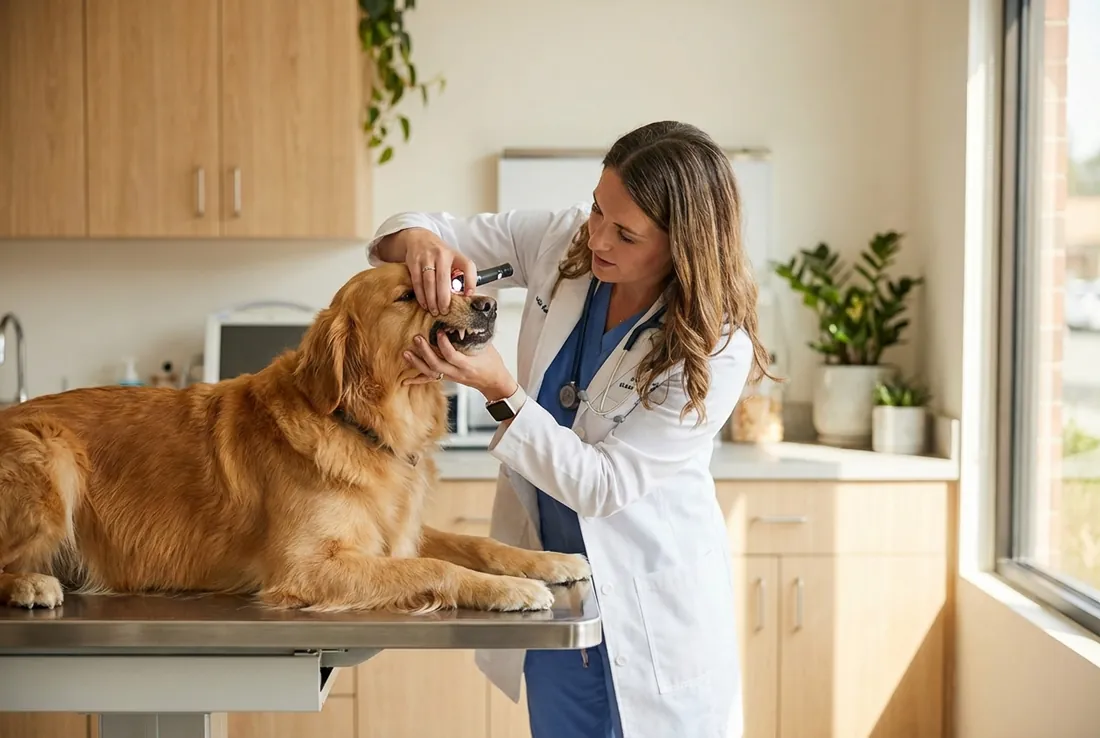
Dental pain in particular produces a specific pattern: the dog approaches the bowl with enthusiasm, then hesitates, then either eats with caution on one side of the mouth or abandons the meal. Many owners attribute this to the dog "being picky" or "getting tired of the same food." Dental disease progresses without visible symptoms for months before this behavioral shift appears.
A reduction of more than 10% in normal food intake sustained over two or more days warrants a veterinary call. Don't wait for the dog to stop eating altogether.
3. Excessive Grooming of a Specific Area
Dogs lick painful areas. This is consistent and useful for diagnosis. A dog that keeps licking a paw or a joint is telling you something about that location. The licking may be so habitual that it creates secondary problems: hot spots or hair loss at the site.
Owners often assume this is a skin issue or an allergy. It may be. But a dog licking the carpus (wrist) of one front leg over and over is worth a vet's assessment. The underlying problem may be a soft tissue injury or early arthritis, not dermatitis.
"When a dog keeps going back to one spot, that spot is trying to tell you something. The dog is self-treating. Our job is to figure out what it's treating."
Dr. Robin Downing, Downing Center for Animal Pain Management4. Personality and Behavior Shifts
A social dog that starts withdrawing from family interaction is showing a red flag. Pain changes personality. A dog that used to greet you at the door now stays on its bed. A dog that was never snappy becomes irritable when touched.
Aggression toward touch in a dog that has never shown it before is a strong warning sign. Dogs bite when they hurt and someone makes contact with the painful area. A dog growling when a child approaches, or snapping when picked up, is not "becoming aggressive." It is protecting itself from pain. The behavior will not resolve until the pain resolves.
Dr. Debra Horwitz, a veterinary behaviorist and past president of the American College of Veterinary Behaviorists, has noted that sudden behavioral changes in adult dogs with no environmental trigger almost always have a physical cause. "Rule out pain before you rule in a behavior problem," she has said at multiple conferences. "Pain is the most common missed diagnosis in veterinary behavior cases."
5. Altered Sleep Patterns
Pain disrupts sleep in dogs as it does in people. A dog that used to sleep through the night and now wakes often or shifts positions over and over may be searching for a comfortable position it cannot find. A dog that sleeps far more than usual may be conserving energy because activity hurts.
Both patterns, more waking and more sleeping, can indicate pain. The key question is whether the pattern changed. If a dog that has always slept well is now restless at night, something shifted. Osteoarthritis is a common culprit, as joint discomfort tends to worsen when the dog has been still for hours.
6. Heavy Panting Without a Clear Cause
Dogs pant after exercise or when anxious. They also pant when in pain. Panting that occurs at rest in a cool environment is a pain signal the body generates to cope with stress. The autonomic nervous system responds to pain with increased respiratory rate.
This is one of the trickier signs because owners attribute panting to temperature or excitement without tracking the context. A dog that pants hard while lying still at night in a temperate room is not hot. It is uncomfortable. Abdominal pain and back pain both produce this pattern.
Look for panting accompanied by a tense abdomen and a wide-eyed or "whale eye" expression, paired with repeated attempts to get comfortable that never succeed. That cluster is a veterinary emergency, not a wait-and-see situation.
7. Changes in Eye Appearance
Eyes reflect pain in ways owners seldom think to check. A dog in serious discomfort may have half-closed eyes, giving a squinting expression even in normal light. The pupils may appear larger than normal. The dog may blink more often than usual, or avoid eye contact.
Head pain and dental pain that radiates toward the face both show up this way. A dog squinting again and again in the absence of bright light or wind is protecting a painful area. It warrants examination, not reassurance.
On the other hand, a dog in pain may stare with a glazed, vacant expression that owners describe as "looking through them." This dissociated look is a coping response. The dog is withdrawing attention from the environment because the internal experience is consuming its processing capacity.
What to Do When You Notice These Signs
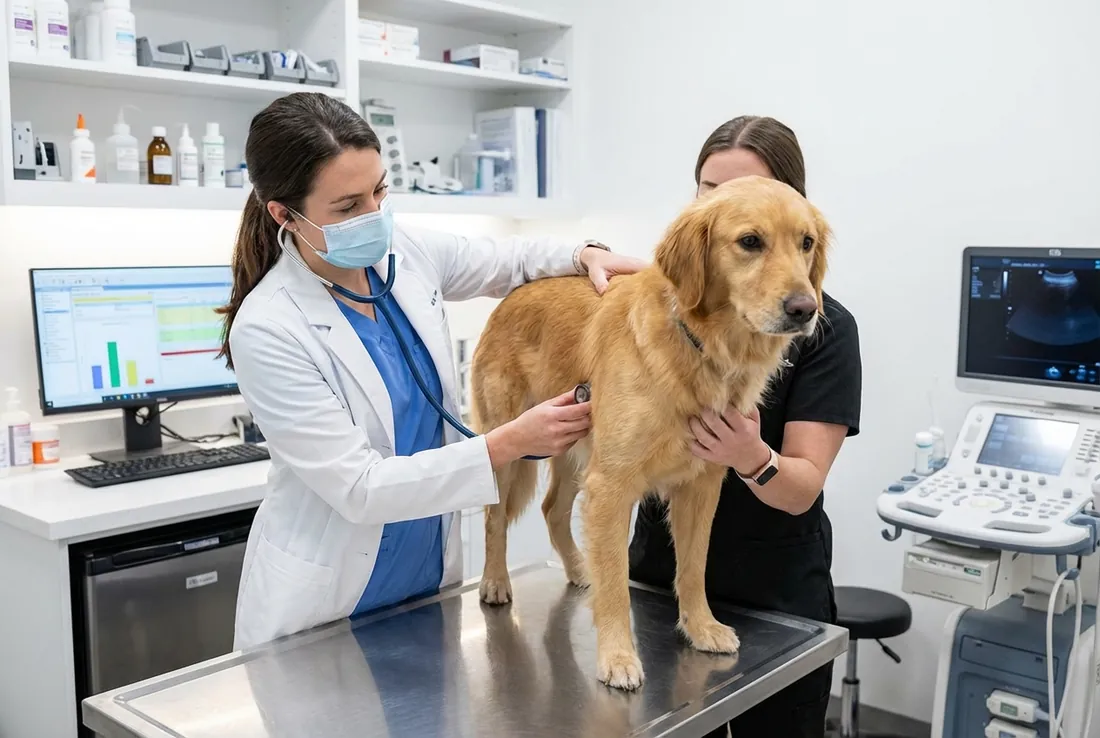
None of these signs alone constitutes a definitive diagnosis. Taken together or sustained over several days, they are a strong signal to contact your veterinarian. Document what you observe: write down when the behavior started and how often it occurs.
Do not administer human pain medications. Ibuprofen, acetaminophen, and naproxen are toxic to dogs at doses that would not faze an adult human. Even aspirin, which is less toxic, causes gastric ulceration in dogs and masks symptoms that a vet needs to assess.
Recognizing these signs early closes the gap between when a dog starts hurting and when it gets help. That gap, in most cases, is measured in weeks or months. Your dog cannot say it hurts, so the behavioral signals in this article are the closest thing to a direct report you will get.
Learn more about the conditions most likely to cause hidden pain in dogs in our overview of the 6 most common dog diseases vets diagnose every week, or check what physical changes to expect as your dog ages in our senior dog care guide.